Brigade-Level Command
Command a Civil War battle at brigade level, the way army commanders planned battles.
Solo Wargaming in the American Civil War. Command a Civil War battle at brigade level, the way army commanders planned battles.
In development
Sound of the Guns is in playtest. It is not on sale yet, and everything on this page is subject to the final rules.
Overview
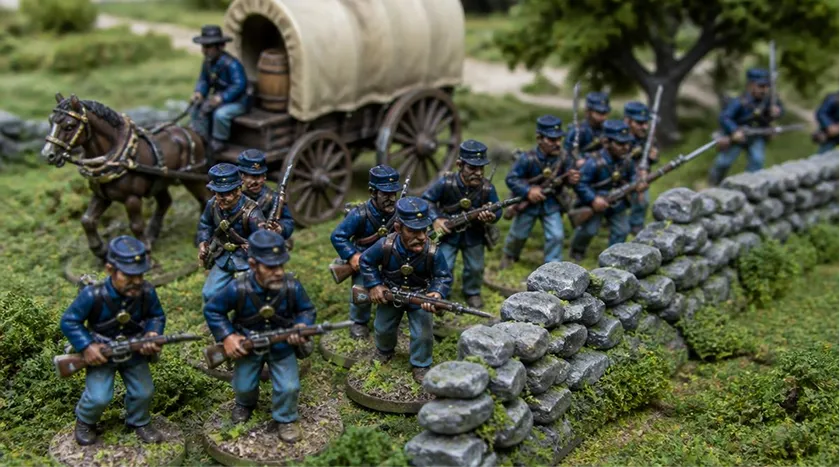
Sound of the Guns is a grand-tactical miniature wargame. The brigade is the command focus: orders, maneuver and combat are decided brigade by brigade, with regiments and batteries as the building blocks.
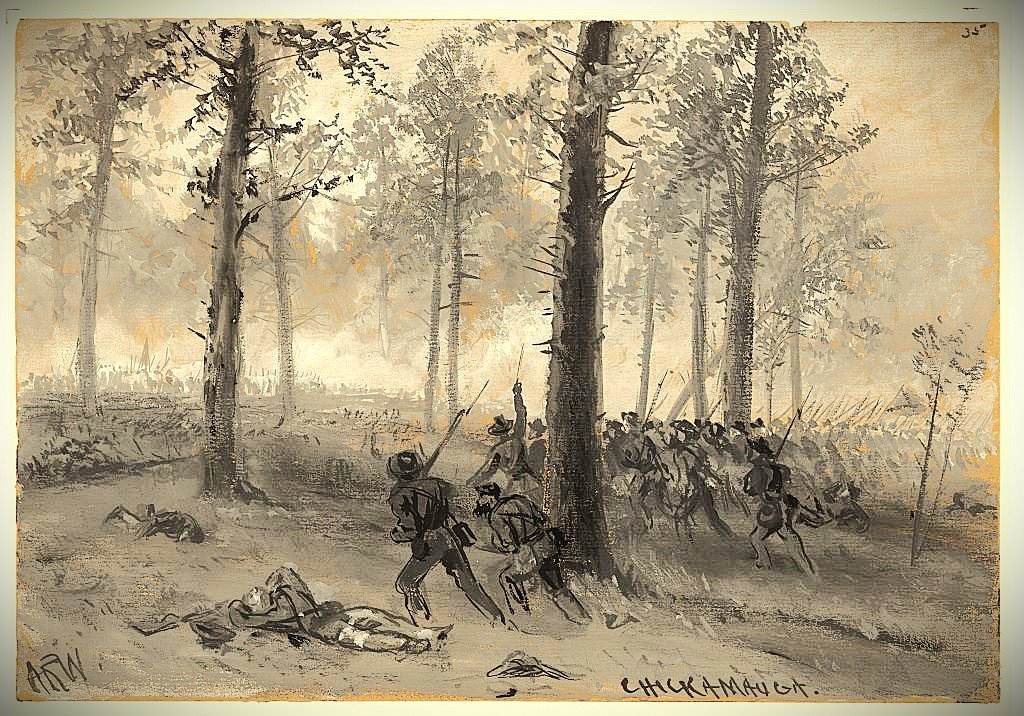
It plays in any figure scale. The designer's own test battle is corps against corps at Chickamauga: Thomas's 14th Corps against D.H. Hill's Corps with the Reserve Corps.
Command a Civil War battle at brigade level, the way army commanders planned battles.
They fight differently: Green regiments charge hard but can shatter, and Volunteers can “Skedaddle” and come back.
Infantry combat centers on the fire fight: regiments trade volleys until one side gives way.
Cards decide who acts after the first round, and objective values are revealed only at the end. Subject to final rules.
How It Plays
A summary of the current draft rules.
| Troops | Union Regulars and Volunteers, rated Crack, Elite, Volunteer or Green. Green regiments are strong in a first charge and fragile after a setback. |
|---|---|
| Formations | Battle line, extended line, road column, attack column, brigade column, skirmish order. |
| Command | Corps › Division › Brigade. Generals are Superior, Talented, Competent, Amateur or Incompetent; staffs (Amateur, Competent, Professional) extend command reach. |
| Turn | Corps commanders roll a d10 plus skill for Round 1. Then a card is drawn each Round: the suit decides the active side and the card the unit type that may act. A Joker ends the Turn. |
| Movement | Approach-march and tactical rates, with a d10 brigade Tactical Maneuver roll: Bold, Steady or Hesitant. |
| Combat | One die per regiment by weapon (rifle, breechloader, repeater), with devastating or ineffective volleys. Every close combat starts with a Combat Reaction check; fire fights go round by round until one side gives way, then melee. |
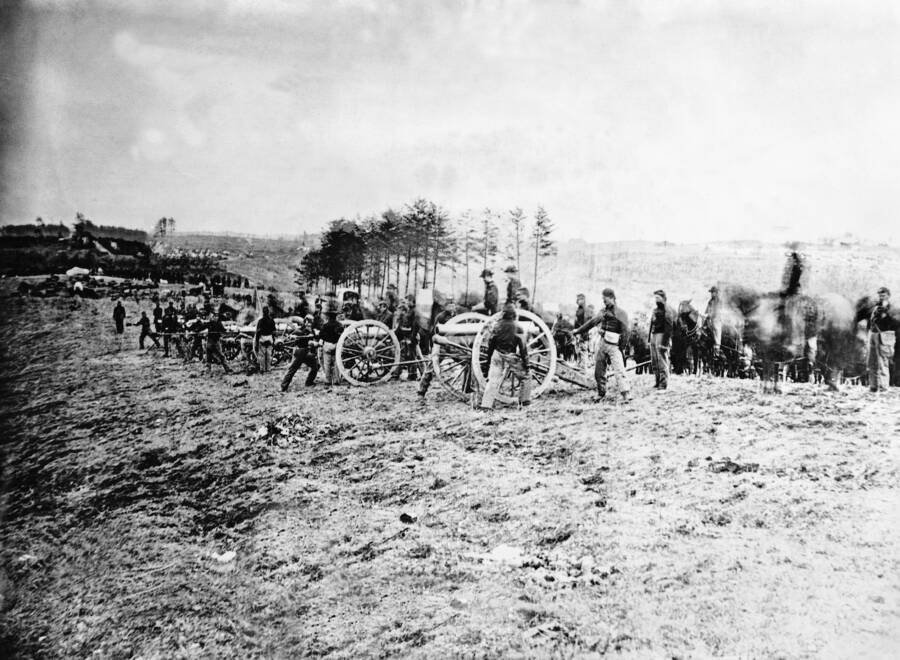
| Artillery | Fire by mission and target: bombardment, close action, tactical fire and counter-battery, with beaten zones, prolonge and smoke. |
| Morale | Checked by brigade at the end of the Turn. Volunteers “Skedaddle” and can rally; Regulars fall back. Named special troops include the Iron Brigade, the Stonewall Brigade, Hood's Texans and the 1st US Sharpshooters. |
| Victory | Objectives are secret, and their point values are rolled only at the end. |